
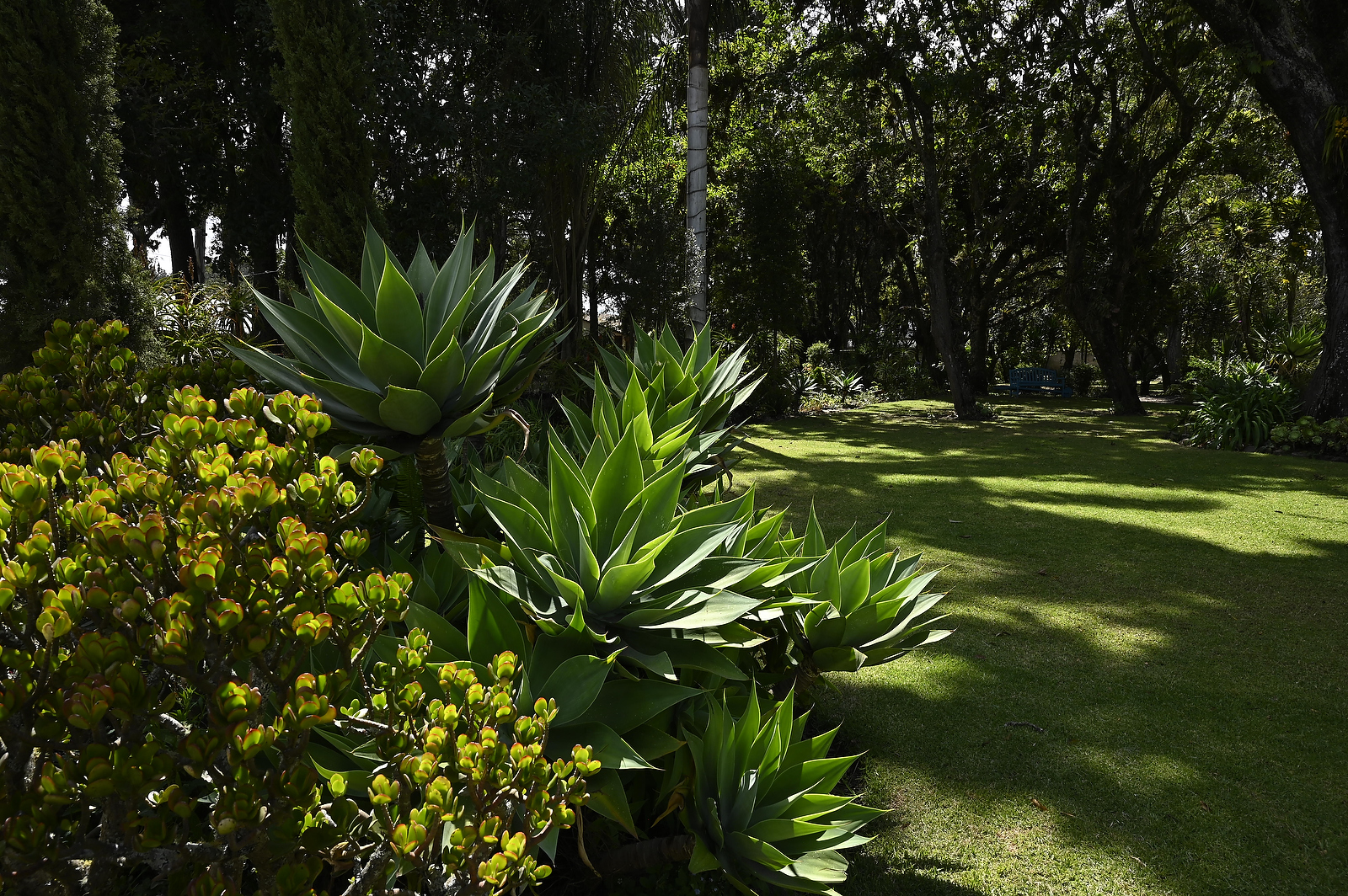
The School of Wonder · First gathering
Philosophical tools for living better
Two days at Hacienda Cusín with Pablo Corral Vega.
Cusín has a limited number of rooms held for our group, and they are taken on a first-come basis.
The invitation
Socrates said philosophy is born of wonder, of the experience of the world. Not of erudition, not of study: of wonder.
I came to philosophy through photography. Forty years of looking taught me something no book gave me: that we move through the world without looking, without paying attention. Our heads full of speeches, of errands, of anxieties. Absent from the place where we stand.
These two days at Cusín are for the opposite. We will read Epictetus, Nietzsche, Meister Eckhart, the Daodejing, Levinas, Simone Weil. But above all we will do: look, walk, write, fall silent, talk, think together. Ancient philosophy was not a university degree. It was a way of life, a training. That is what I want to recover.
This is not therapy. It is not a self-help workshop. Nor am I here to tell you how you should live: I deeply distrust anyone who hands out moral lessons. It is thinking together, by the Socratic method, with rigour and without formality, about the things that truly matter.
What we will cover
Four territories
Each one opens with an idea and ends in an exercise. The exercises are not announced: they are done.
i
Amor fati
To love your fate. Nietzsche says it with passion: to love what one was, what one is and what one will be. Not to resign oneself —to love—. We begin with Epictetus and his distinction between what depends on you and what does not, and go on to ask who convinced us that living in anguish is what it means to be responsible.
iii
Consciousness and language
To speak to ourselves we need a language, a culture. Lynn Margulis showed that life is made through association; Saint Francis called the sun, the water and the animals his brothers; Donna Haraway invites us to see ourselves entangled with countless species. Ontological humility begins when we understand that intelligence does not belong to us: it circulates through the living web of which we are only a part.
ii
Dialogues between West and East
A fourteenth-century Dominican mystic and a Chinese book written two and a half thousand years ago say almost the same thing in words that resemble each other not at all. Eckhart’s detachment; the soft and the yielding as companions of life in the Daodejing. Eckhart’s detachment, the gentleness of what yields and the openness to what is trace a path that leads not out of the world, but towards a deeper way of inhabiting it.
iv
The philosophy of tenderness
Tenderness is not weakness: it is a militant gentleness in the face of the world. It is what Levinas finds in the disarmed face of the other; what Buber gathers as the full recognition of a Thou, a Thou whole and worthy; and what Simone Weil calls attention —«absolutely pure attention is prayer»—. A distracted tenderness is not tenderness.
Do not seek to have events happen as you want them to, but instead want them to happen as they do happen, and your life will go well.
Epictetus
The place
Hacienda Cusín
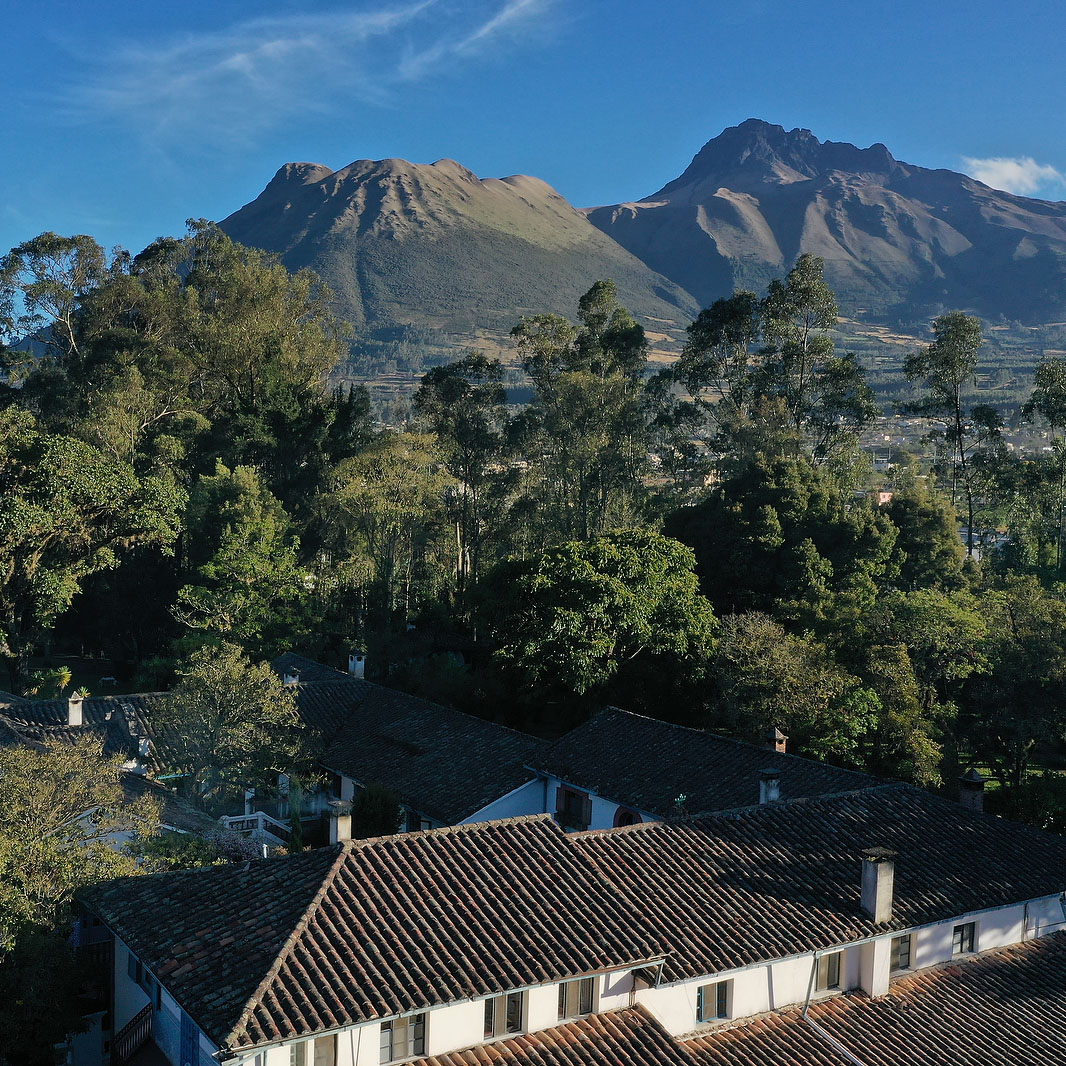
At the foot of Imbabura, beside Lake San Pablo. A seventeenth-century hacienda of stone, fireplaces and old gardens, made for walking slowly and staying quiet a while.
This is not a logistical detail. Part of the work of these two days is letting a place like this change your pace: the altitude, the cold of the afternoon, the smell of woodsmoke, the silence that begins when night falls.
On Friday night we gather with whoever has arrived. Those who cannot come on Friday can arrive on Saturday before 11 a.m.
How to book
Three steps
You pay me for the workshop. You book the lodging yourself, directly with the hacienda, at the special rate we arranged for the group.
1
Apply and pay
USD 160
Per person, the workshop only. I offer several partial scholarships to anyone who needs one. Fill in the form at the end, make the transfer and upload the receipt there. Your place is held with the deposit.
2
I confirm
I review your application and write back. If the group is already full, I return your deposit in full the same day.
3
Book at Cusín
With my confirmation in hand, you call the hacienda and book your room at the group rate. Per person, per night, breakfast included; lunch and dinner are charged separately.
- Casa Cusín — USD 80
- Monasterio — USD 65
Plus 10% service and VAT. felix@cusin.com.ec · +593 99 583 5952. Mention La Escuela del Asombro.
- You can arrive on Friday night —ideal, so you are there for the evening conversation— or on Saturday before 11 in the morning.
- We finish on Sunday afternoon or evening. Those who enrol receive the detailed schedule a few days beforehand.
- Cusín holds a limited number of rooms for us, and September is high season in Imbabura. The sooner you call, the better.
- There are 20 places. When they are gone, it closes. There is no waiting list.
How we work
- You do not need to have read anything. I bring the texts and we read them together, out loud.
- We speak and we fall silent. There will be conversation and there will be silence, and both are part of the exercise.
- We work in small groups. Even with twenty of us, much of the time you will be with two or three people, or alone.
- Bring a notebook. Paper. We are going to write by hand.
- No screens during the sessions.
Is it for you?
Yes
If you go about with the feeling of living with the handbrake on. If you keep finding yourself somewhere else and never where you are. If you are at a crossroads and the decisions keep you awake. Or if you are simply curious to think seriously for two days, in good company.
No
If you are looking for a diagnosis, a treatment or a prescription. Or if you want to convince the other participants of your religious or political ideas. There are other forums for that, and they are respectable. This gathering promises to cure nothing: it promises two days of honest thinking and a beautiful place in which to do it.
Who leads the gathering
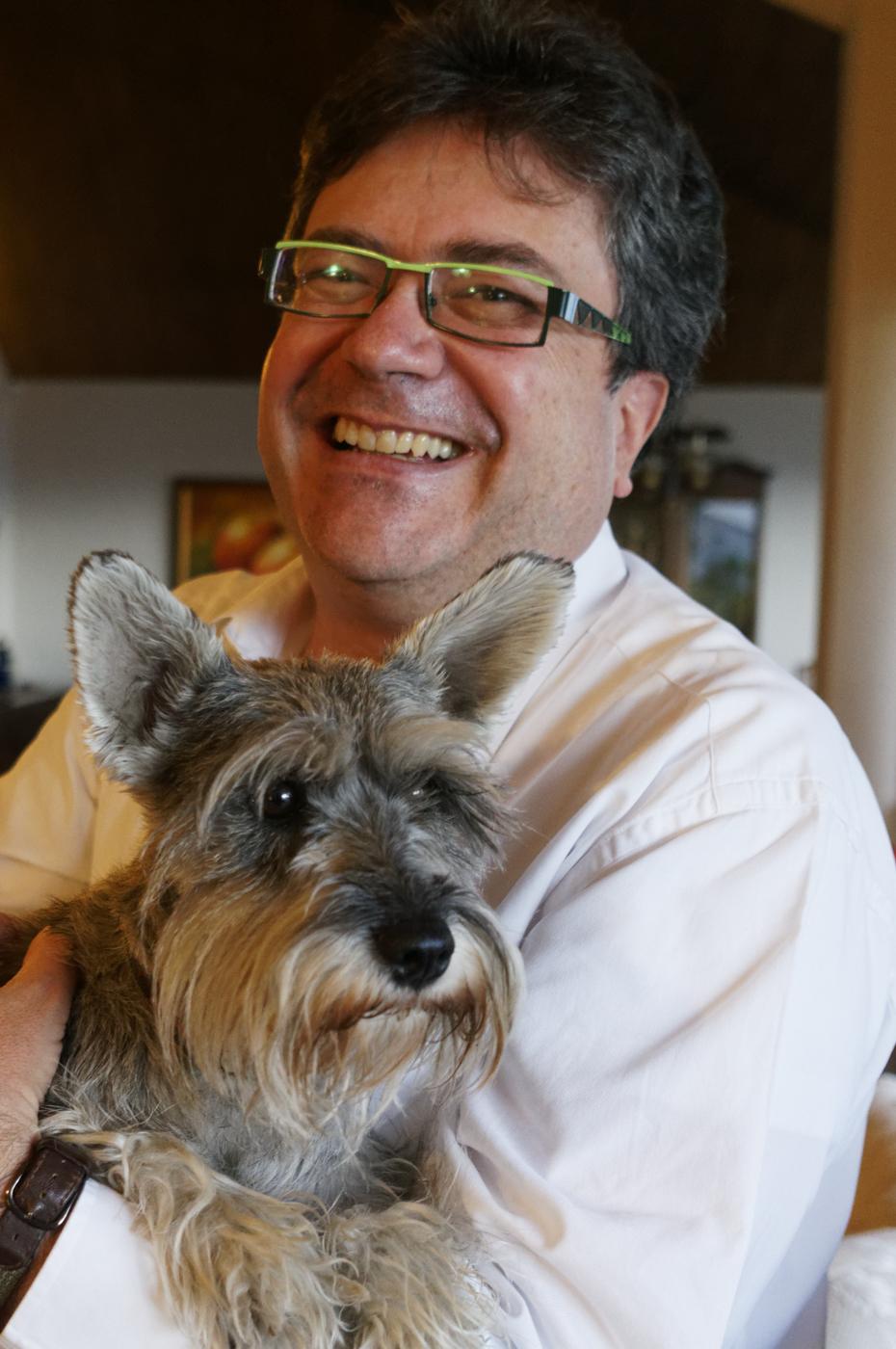
Pablo Corral Vega
Photographer, writer and philosophical counsellor. I have published in National Geographic, the New York Times and Smithsonian, and made eight books —for one of them, Andes, Mario Vargas Llosa wrote twenty short stories—. I was a World Press Photo juror, a Nieman Fellow at Harvard and Secretary of Culture of Quito. I trained as a lawyer and run a law practice in Quito. I hold a master’s degree in Philosophies of Care from the Universitat Autònoma de Barcelona, with a thesis on tenderness, and I am writing a book on the philosophy of tenderness.
But the only thing that matters here is that I spent my life training one single thing: attention. Forty years learning to look. That —and not a diploma— is what I bring to this gathering.
All year round, not only in September
Philosophical counselling
This gathering grows out of what I do the rest of the year: accompanying one person at a time. There are no clinical protocols, no diagnoses. It is an interlocutor: someone who thinks with you, seriously and without hurry, about the question that gives you no peace.
Sessions in person at my studio in Quito, an hour and a half long. It does not replace psychological or psychiatric therapy: it complements it.
One session, in two movements
- Half an hour of reading and music. A threshold for stepping out of the day’s noise.
- An hour of dialogue. Thinking out loud, using philosophy as a mirror.
See you at Cusín
No one has your perspective. No one has lived what you lived. That wonder is yours, and it can be trained.
September 26 and 27, 2026 · 20 places
— questions before applying? —