
The School of Wonder
Philosophical Exercises
Gatherings guided by Pablo Corral Vega, photographer, writer and philosophical counselor.
For the philosophers of Antiquity, philosophy was not a doctrine to be learned but a way of life to be practiced. Their texts sought less to inform than to form: to transform the way their readers saw and lived. Stoics, Epicureans and Platonists practiced exercises of attention, memory and seeing every day.
Pierre Hadot called them spiritual exercises. I call them, more modestly, philosophical exercises. They are neither therapy nor self-help. Nobody leaves with a recipe. If anything, you leave with more questions, and with more peace.
To strive to see the world as if for the first time is to rid ourselves of the conventional, routine vision we have of things; it is to rediscover a raw, naïve vision of reality, and so to become aware of the splendor of the world, which usually escapes us.
Pierre Hadot, The Present Alone Is Our Happiness
What a gathering is like
Read, talk, look, let go
- Read. Each participant receives a booklet of texts by Pierre Hadot, Epictetus, Simone Weil, Nietzsche, Meister Eckhart, the Daodejing, Martin Buber, Francis of Assisi. We read them aloud, slowly, and let them speak.
- Talk. In a circle. Nobody has to convince anybody. What surprises people most is how much they learn by listening to someone who thinks differently.
- Look. I spent forty years behind a camera learning to pay attention. Wonder, for me, is not a concept but a craft: it is practiced. We go out into the garden, lie down on the grass, watch the sky through the branches, sit around the fire.
- Let go. Many of the exercises are about detachment. Asking who I am once I take off the accessories. Imagining the world without me. Ceasing to defend, ceasing to prove.
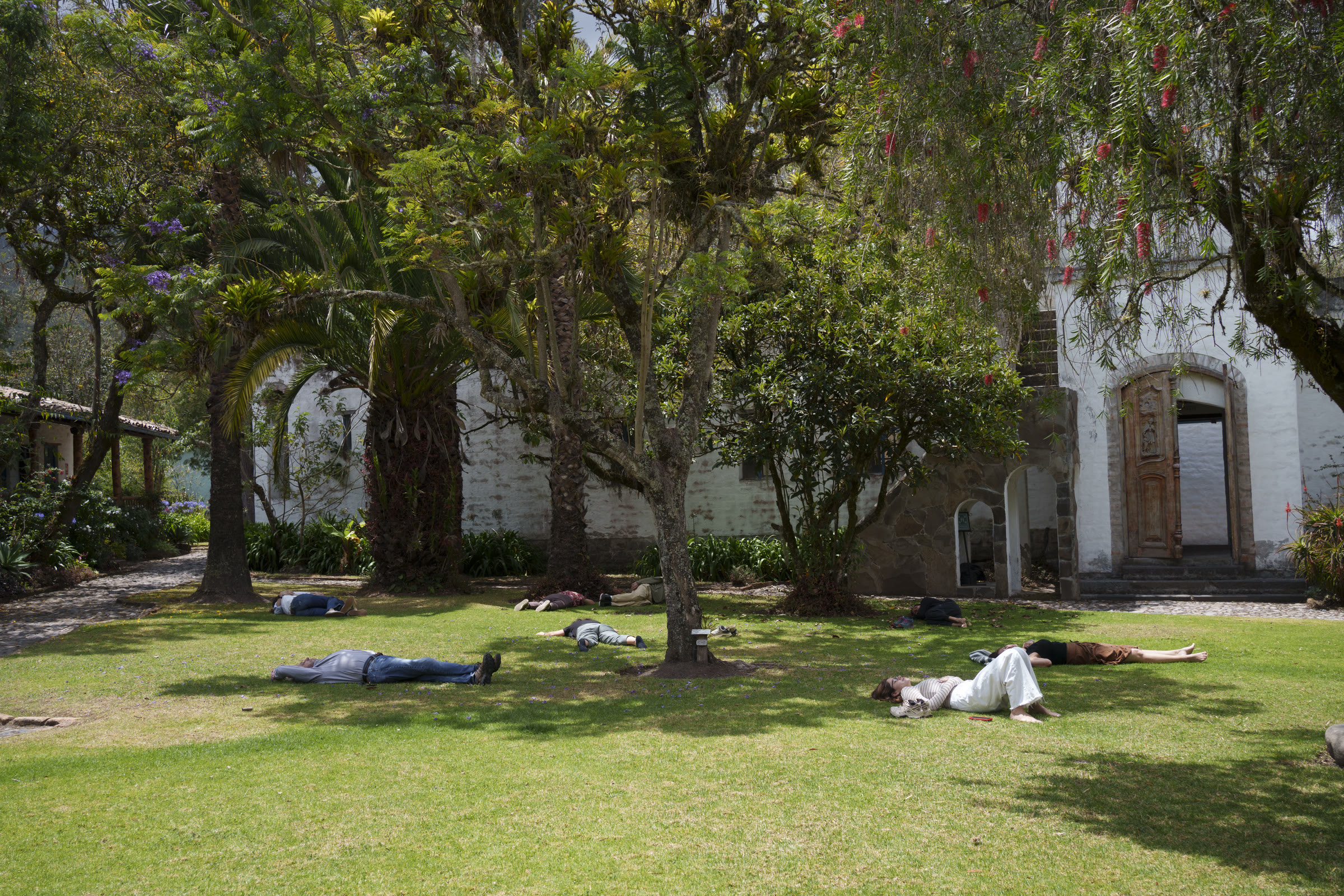
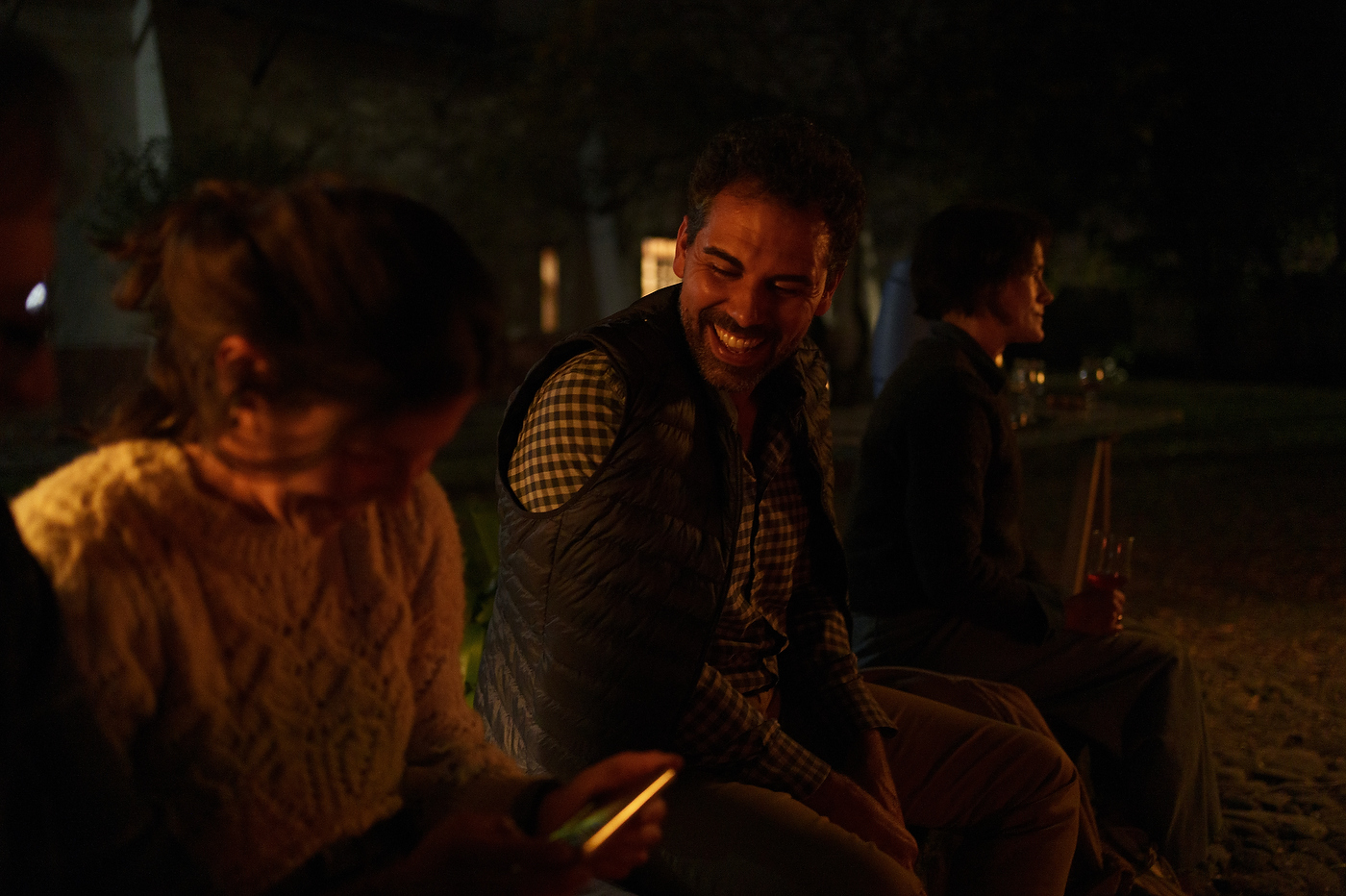
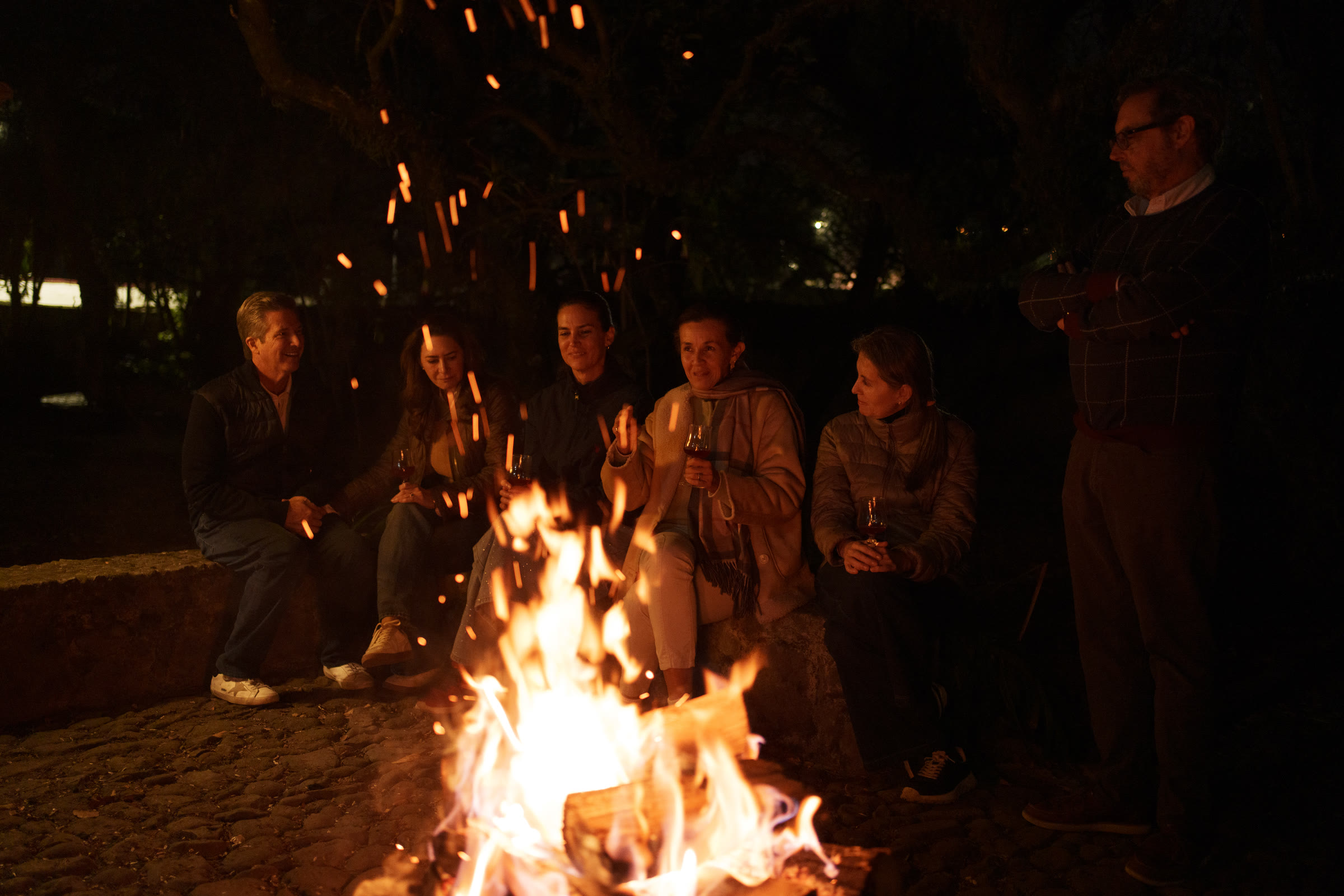
Hacienda Cusín · September 2026
What they took home
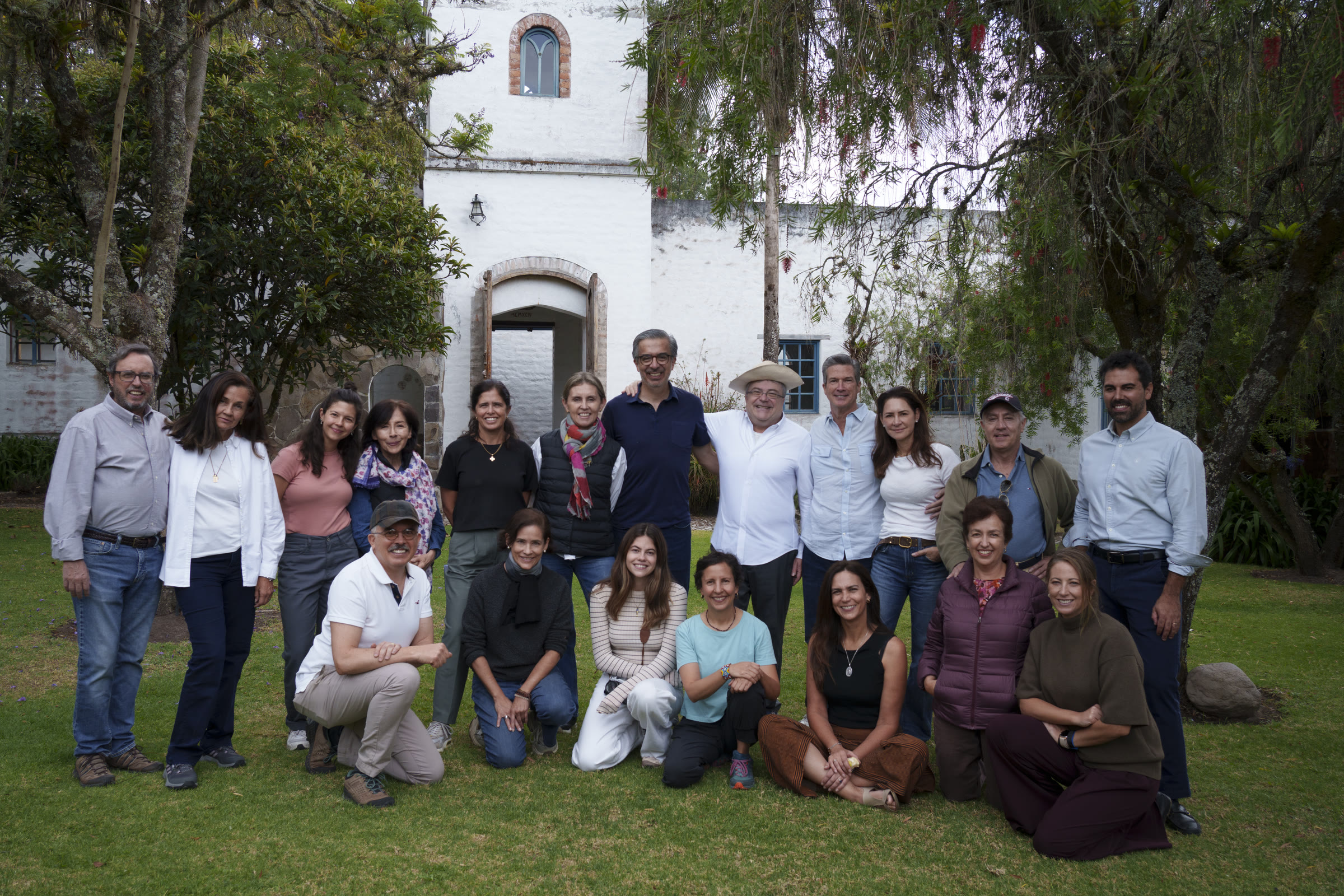
In September we spent a weekend together at Hacienda Cusín, in Imbabura, Ecuador. At the end, each person said aloud what they were taking with them. This video brings those voices together.
In the press
Letting importance rest
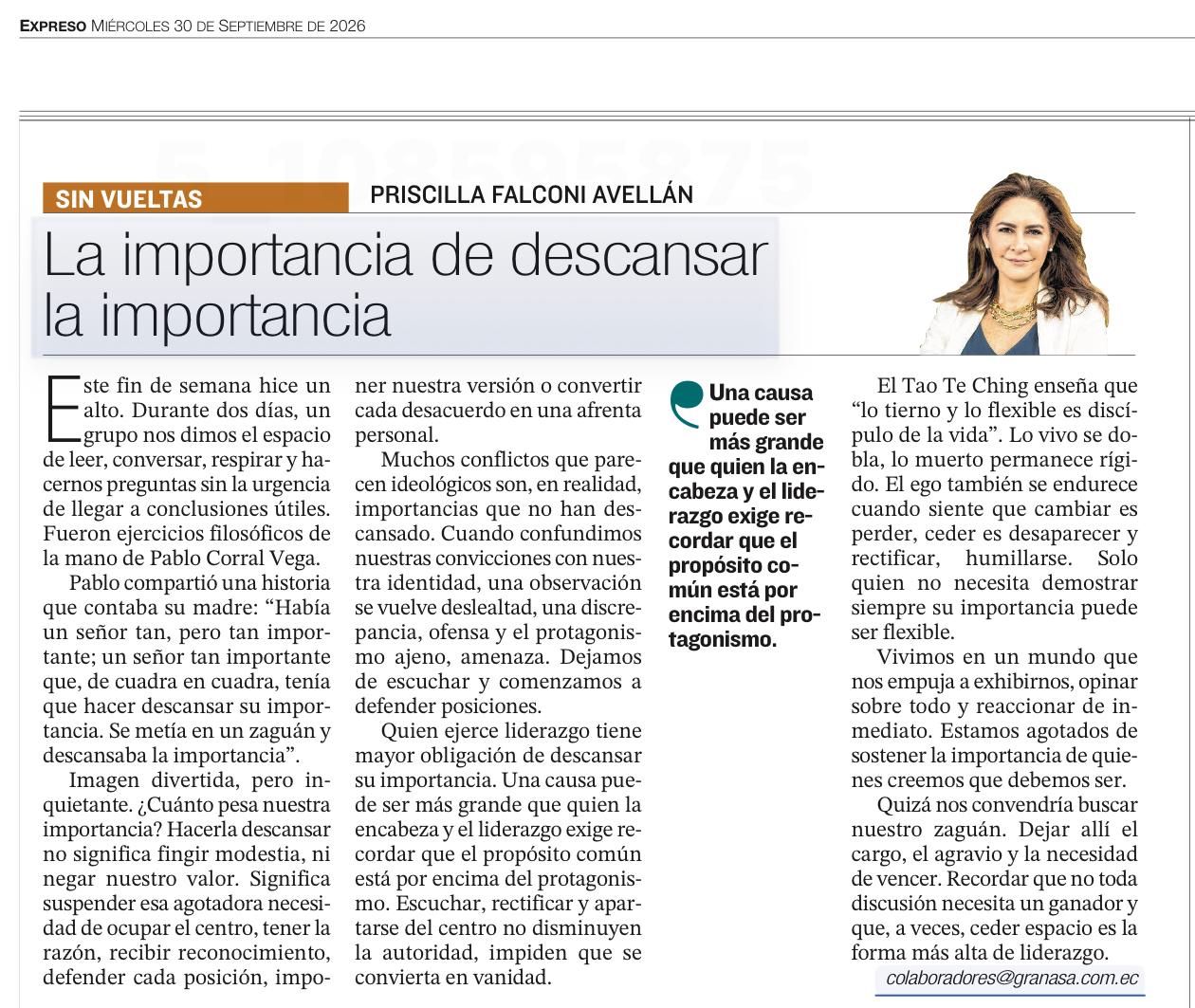
Priscilla Falconi Avellán was part of the circle at Cusín. On Wednesday, September 30, 2026, she published this column in the Ecuadorian newspaper Expreso. It is reproduced here, in translation, with her permission.
This weekend I came to a stop. For two days, a group of us gave ourselves the space to read, talk, breathe and ask ourselves questions without the urgency of reaching useful conclusions. They were philosophical exercises, led by Pablo Corral Vega.
Pablo shared a story his mother used to tell: “There was a man so very, very important; a man so important that, every block or so, he had to let his importance rest. He would step into a doorway and rest his importance.”
A funny image, but an unsettling one. How much does our importance weigh? Letting it rest does not mean feigning modesty or denying our worth. It means suspending that exhausting need to occupy the center, to be right, to be recognized, to defend every position, to impose our version or to turn every disagreement into a personal affront.
Many conflicts that seem ideological are, in fact, importances that have not rested. When we confuse our convictions with our identity, a remark becomes disloyalty, a disagreement an offense, and someone else’s prominence a threat. We stop listening and start defending positions.
Those who lead have a greater obligation to let their importance rest. A cause can be greater than whoever heads it, and leadership demands remembering that the common purpose comes before the spotlight. Listening, correcting course and stepping away from the center do not diminish authority; they keep it from turning into vanity.
The Tao Te Ching teaches that “the tender and the supple are disciples of life.” What lives bends; what is dead stays rigid. The ego also hardens when it feels that changing is losing, yielding is disappearing and correcting oneself is humiliation. Only someone who does not always need to prove their importance can be flexible.
We live in a world that pushes us to show ourselves off, to have an opinion on everything and to react immediately. We are exhausted from holding up the importance of who we believe we ought to be.
Perhaps we should look for our own doorway. Leave there the title, the grievance and the need to win. Remember that not every argument needs a winner and that, sometimes, making room is the highest form of leadership.
Priscilla Falconi Avellán · “Sin vueltas” column, Expreso (Ecuador), September 30, 2026. Original title: “La importancia de descansar la importancia.” Translated from the Spanish.
Who guides the gatherings
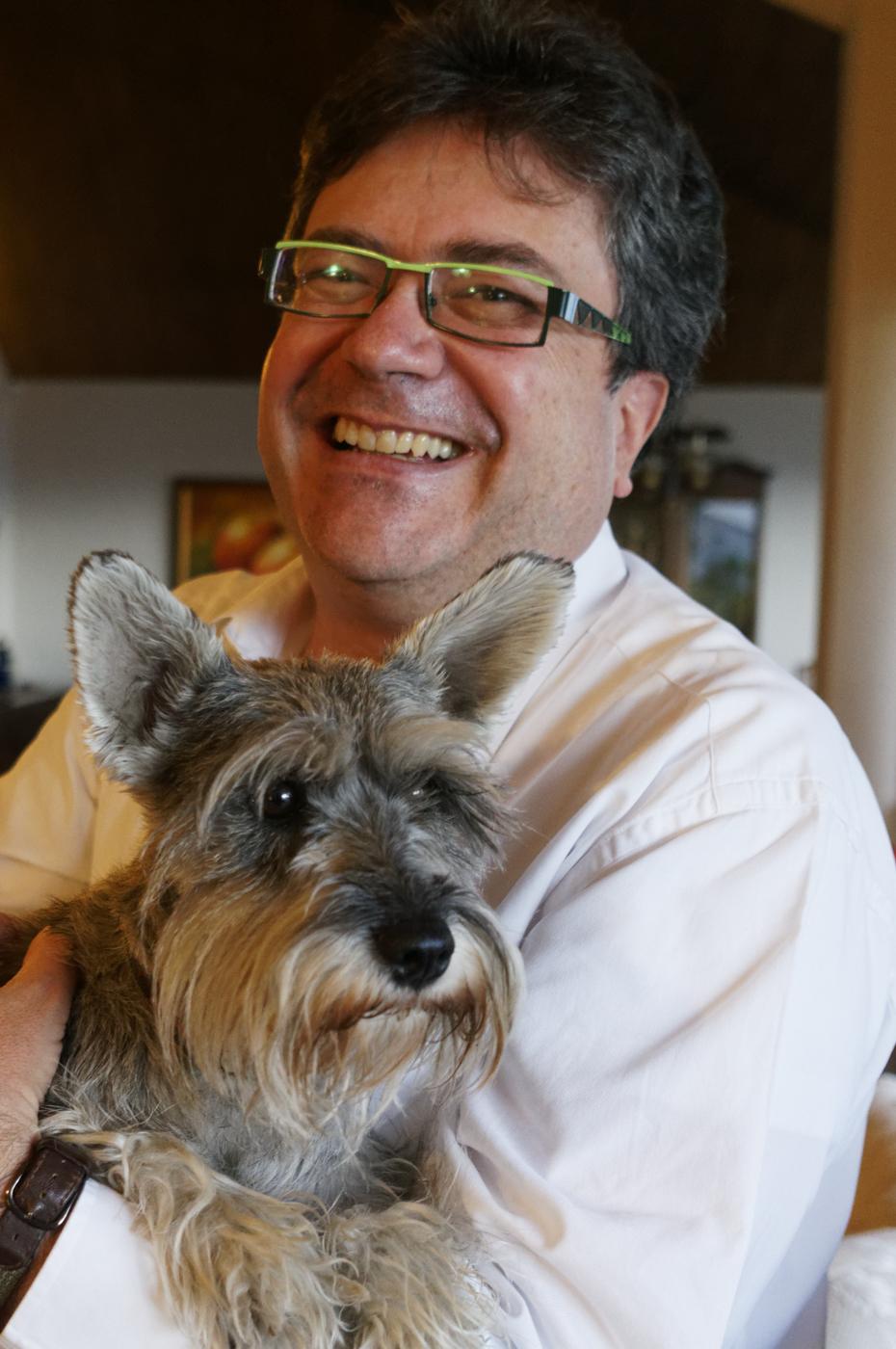
Pablo Corral Vega
Photographer, writer and philosophical counselor. My work has appeared in National Geographic, The New York Times and Smithsonian. I have published eight books —for one of them, Andes, Mario Vargas Llosa wrote twenty short stories—, served on the World Press Photo jury, was a Nieman Fellow at Harvard and Secretary of Culture of Quito. I trained as a lawyer and run a law firm in Quito. I hold a master’s degree in the Philosophy of Care from the Universitat Autònoma de Barcelona, with a thesis on tenderness, and I am writing a book on the philosophy of tenderness.
But the only thing that matters here is that I have spent my life training a single thing: attention. Forty years learning to look. That —and not a diploma— is what I bring to these gatherings.
Next gathering
Mallorca
November 7 and 8, 2026
Details coming soon. If you would like to know more, write to me.
Want to see what the last gathering was like? Hacienda Cusín, September 2026.